Rosacea, acne or dark spots: which prescription cream?
Red bumps, jawline breakouts and brown patches can look alike but need different creams. Here’s how to tell them apart, what’s in each and where the research stops.
In short
- Rosacea, adult acne and dark spots can look alike, so a provider checks photos of your face before choosing a cream.
- Rosacea Cream is for rosacea bumps, Hormonal Acne Cream is for mild to moderate acne, and Dark Spot Cream is for melasma, with use on other dark spots off-label.
- The rosacea and acne creams are judged at about 12 weeks, and Dark Spot Cream is used in courses of 8 to 12 weeks with breaks.
- All three are compounded, no trial has tested these combinations, none is used in pregnancy, and a provider decides what’s right for you.
How to tell the three apart
Rosacea is redness in the middle of the face, often with flushing, stinging and small red bumps. Unlike acne, it doesn’t cause blackheads. On darker skin, the redness can look brown or purple.
Acne brings blackheads, whiteheads and breakouts. Adult breakouts often sit along the jaw and chin and flare with periods, but most adults with jawline acne have normal hormone levels.
Dark spots are usually one of three things: melasma, brown patches on the cheeks, forehead or upper lip set off by sun, heat and hormones; flat marks left after pimples or rashes; or sun spots, which don’t fade in winter.
Tretinoin and steroids can make rosacea worse, and since each pimple can leave a mark, acne is treated first.
| Compare | Rosacea Cream | Hormonal Acne Cream | Dark Spot Cream |
|---|---|---|---|
| Made for | Red bumps and pimples of rosacea | Mild to moderate acne | Melasma; off-label for marks and sun spots |
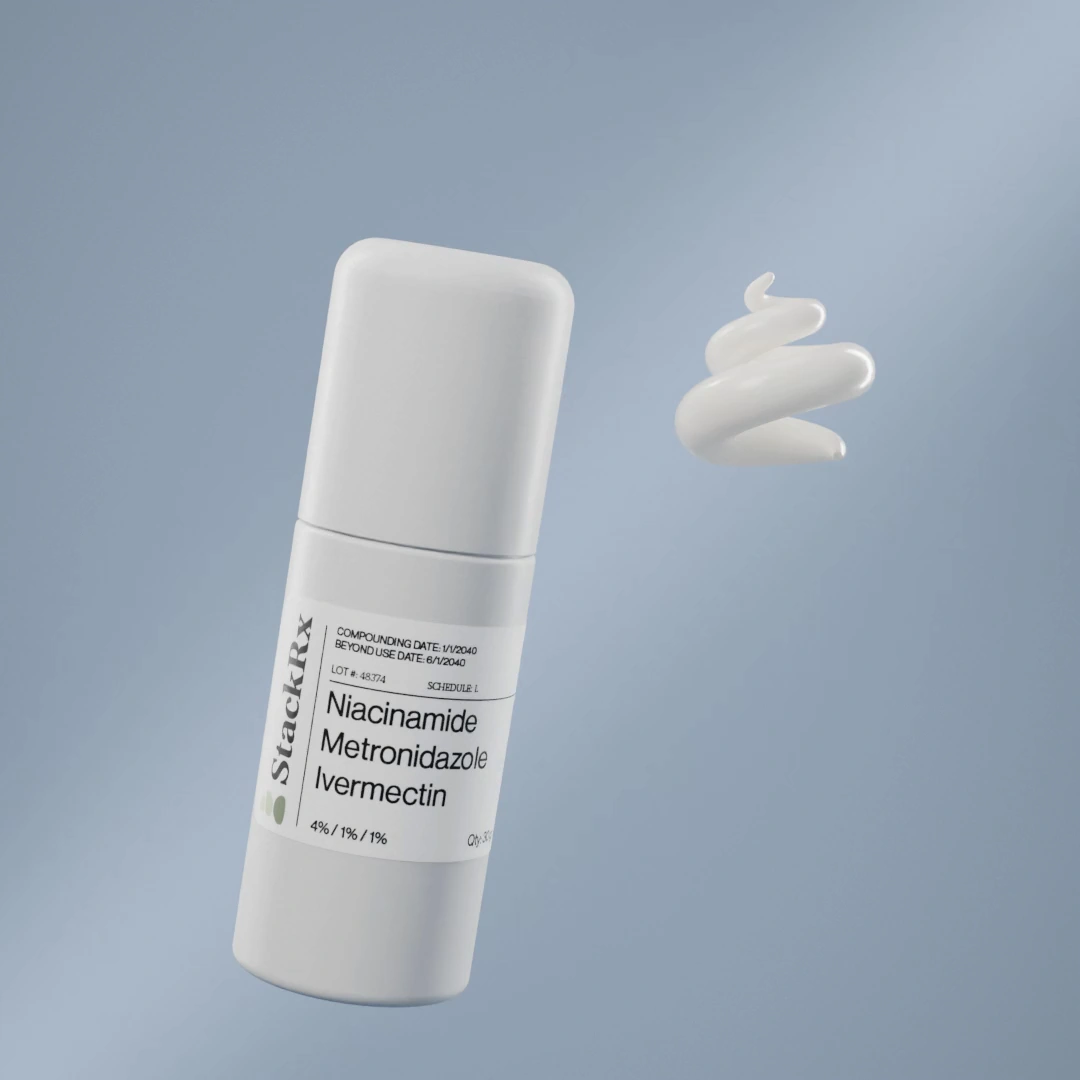
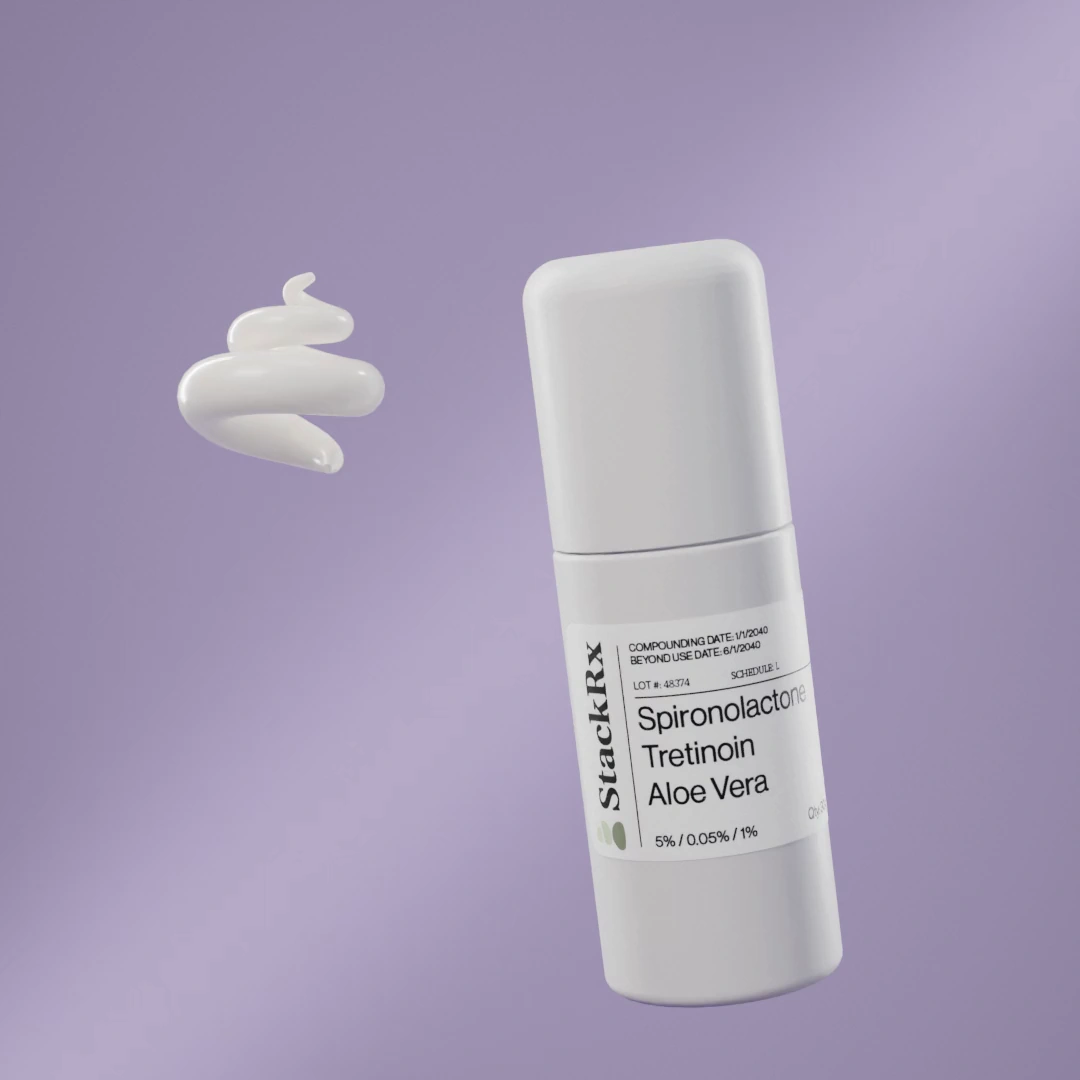
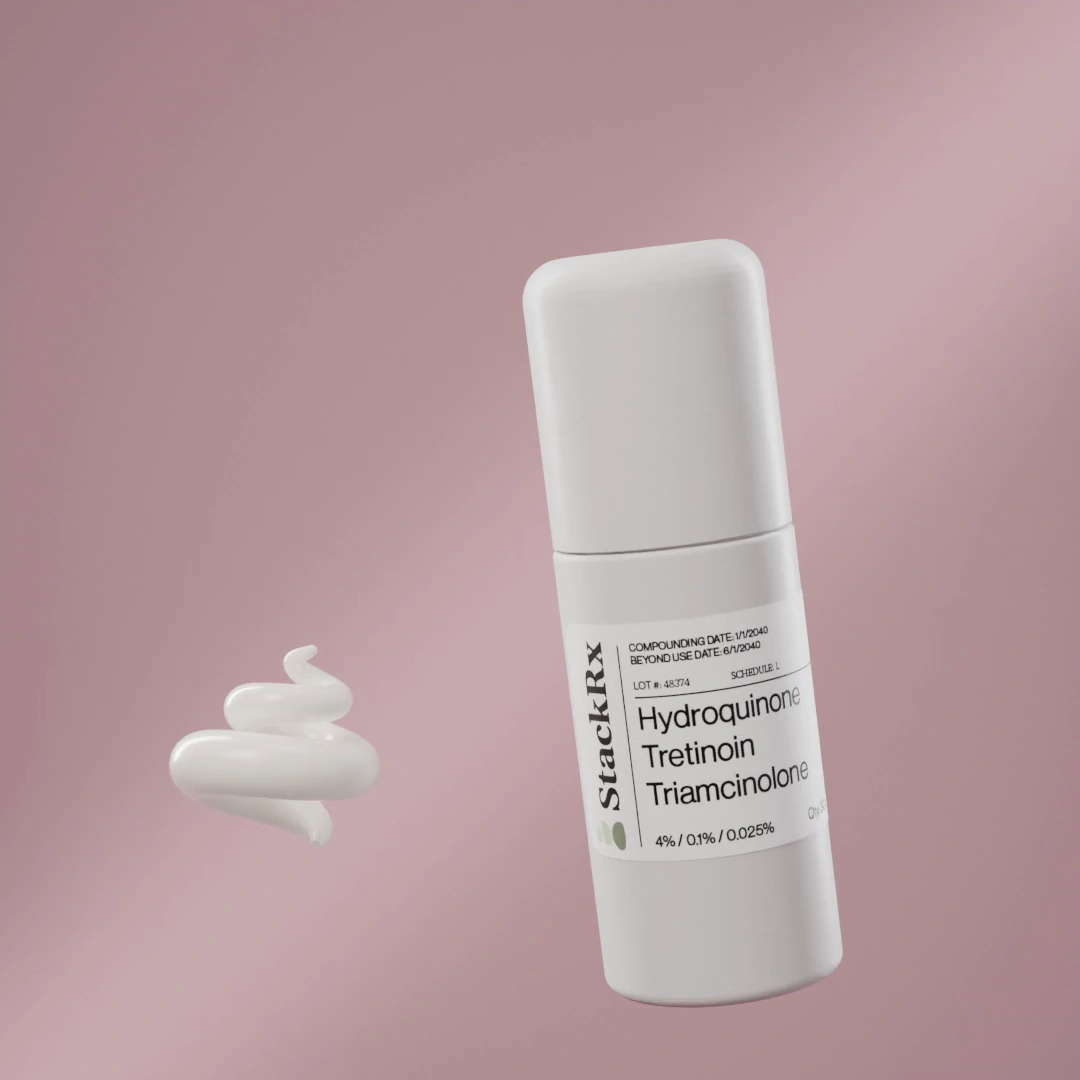
| What’s inside | Ivermectin 1%, metronidazole 1%, niacinamide 4% | Spironolactone 5%, tretinoin 0.05%, aloe vera 1% | Hydroquinone 4%, tretinoin 0.1%, triamcinolone 0.025% |
| How it’s used | Once a day, a thin layer over the face | Once a night, after easing in | Once a night, on the spots, in courses |
| Judged at | About 12 weeks | About 12 weeks | 8 to 12 weeks |
| FDA status | Compounded; each medicine is approved alone for bumps | Compounded; tretinoin is approved alone for acne | Compounded; the approved triple cream differs |
Rosacea Cream: for the bumps, not all the redness
Rosacea Cream combines ivermectin 1%, which reduces Demodex mites and has been FDA-approved alone for rosacea since 2014, with metronidazole 1%, which is thought to calm inflammation. Niacinamide 4% is a form of vitamin B3, but not niacin, the form that causes flushing. In lab and small studies, it helped skin make barrier fats.
In two 12-week trials of about 1,370 adults with moderate to severe rosacea bumps, about 4 in 10 using ivermectin cream were clear or almost clear, against 1 to 2 in 10 on a plain cream. In a 10-week trial of 746 people, metronidazole 1% gel left about 9 fewer bumps on average, against about 6 on a plain gel. In a 4-week study of 50 people with rosacea, a niacinamide moisturizer improved the barrier.
No study has tested the three together. None was studied for constant redness, visible blood vessels or stinging, and using the cream mainly for redness is off-label. In the ivermectin trials, bumps began to drop within 2 to 4 weeks. Rosacea is long-term: in one trial, bumps came back in about 6 in 10 people within 8 months of stopping.
Hormonal Acne Cream: tretinoin plus a hormone blocker
Hormonal Acne Cream pairs tretinoin 0.05%, a retinoid FDA-approved for acne on its own, with spironolactone 5%, an androgen blocker usually taken as a pill. Aloe vera 1% is added to soothe. No spironolactone product for the skin is FDA-approved, and its use for acne is off-label.
In 12-week trials of tretinoin 0.05%, red spots fell by about half or more on average. Spironolactone on the skin has only a handful of small studies, of 15 to about 80 people each, mostly of a gel used twice a day. Those that compared it with a plain gel found fewer spots, but not on every measure, and once-nightly use hasn’t been studied. Spironolactone pills have much stronger evidence, including a 6-month trial of 410 women, but those results don’t carry over to a cream. Aloe’s one study used a 50% gel; this cream has 1%.
Most people ease in over a month. A few extra breakouts in weeks 3 to 6 are common, and a clear difference can take more than 6 weeks. The cream won’t shrink deep cysts or treat PCOS, and acne usually comes back after stopping.
Dark Spot Cream: for melasma, in courses
Dark Spot Cream combines hydroquinone 4%, which slows pigment production, tretinoin 0.1%, which speeds up skin turnover, and triamcinolone 0.025%, a mild steroid that calms irritation.
Most of the evidence comes from Tri-Luma, the one FDA-approved cream with hydroquinone, which has half the tretinoin and a different steroid. In two 8-week trials of 641 adults with moderate to severe melasma, about 3 in 4 were clear or almost clear. Fully clear was less common: about 1 in 8 in one trial, 4 in 10 in the other. Over 12 months of on-and-off use in 569 people, about 1 in 25 had mild visible blood vessels, and 2 had mild skin thinning.
This formula hasn’t been studied in trials or approved. Using it for acne marks and sun spots is off-label, with less evidence, though tretinoin 0.1% alone lightened all three in trials of up to 10 months. It’s used in courses, often 8 to 12 weeks, then a break of a month or more. Melasma tends to come back, especially in summer.
Sun and irritation
With any of the three, wear SPF 30 or higher every morning. Sun is the most common rosacea trigger, and tretinoin makes skin burn more easily. Visible light, even through windows, can darken melasma, and a tinted mineral sunscreen with iron oxides blocks more of it.
Mild stinging, dryness, peeling or redness is common in the first weeks, mostly from tretinoin. On deeper skin, irritation can leave dark marks, so ease in slowly. Don’t wax skin treated with tretinoin, and keep benzoyl peroxide off skin with Dark Spot Cream: together they can leave a temporary dark stain.
Safety and who shouldn’t use them
StackRx is for adults 18 and over. A provider reviews your health history, medicines and photos first, and prescribes only if it’s right for you.
Pregnancy and breastfeeding
- Rosacea Cream: not during pregnancy, because there isn’t enough information on ivermectin cream. Ask first if you’re trying to conceive or breastfeeding.
- Hormonal Acne Cream: not during pregnancy or while trying to conceive. High doses of spironolactone made male animal offspring develop female features, which hasn’t been seen in people, and tretinoin is avoided too. Ask first if you’re breastfeeding.
- Dark Spot Cream: not during pregnancy or breastfeeding. Hydroquinone is absorbed through the skin more than most creams.
If you become pregnant or start trying while using the acne or dark spot cream, stop and message your care team.
Side effects
- Rosacea Cream: in the ivermectin trials, burning and irritation each affected about 1 in 100 people or fewer. Metronidazole can make your eyes water and, very rarely, causes numbness or tingling in the hands or feet.
- Hormonal Acne Cream: some people felt burning from spironolactone. Tell your provider about kidney disease, a high potassium level or Addison’s disease.
- Dark Spot Cream: with long use, the steroid can thin skin or bring out small blood vessels. Rarely, hydroquinone causes ochronosis, a blue-black darkening that’s hard to reverse.
Stop and message your care team if you get blisters, swelling, a spreading rash, numbness or tingling, or skin that turns blue-gray, thin or shiny. Get emergency care for chest pain, trouble breathing, or swelling of the face, lips or throat.
When to see someone in person
- Eye pain, light that hurts your eyes, or blurred vision that doesn’t clear when you blink: an eye doctor the same day.
- A nose that has thickened or changed shape, or deep, painful cysts most of the time: a dermatologist.
- A dark spot that’s new, changing, raised, bleeding or not healing: a dermatologist first, because lightening a spot can hide changes.
- Acne with irregular periods, new body hair or a deeper voice: your doctor, for blood tests.
All three creams are compounded, and the FDA doesn’t review compounded medicines for safety, effectiveness or quality. FDA-approved options include single-ingredient rosacea creams, tretinoin, clascoterone (Winlevi) and Tri-Luma, and your provider may recommend one instead. See compounded vs FDA-approved medicines and the skin page.
Sources
- Soolantra (ivermectin 1%) prescribing information; Stein Gold et al. 2014 (two 12-week trials, 1,371 adults)
- MetroGel 1% prescribing information (746 people, 10 weeks)
- Draelos et al., Cutis 2005 (50 people with rosacea, 4 weeks)
- Taieb et al., JEADV 2016 (36-week follow-up after stopping)
- Retin-A (tretinoin) prescribing information; tretinoin 0.05% lotion trials (JDD 2019; Eichenfield et al. 2019)
- Afzali et al., J Dermatol Treat 2012 (78 people); Ayatollahi et al., Health Sci Rep 2021 (15 people); Rehan et al., J Dermatol 2023 (review of topical spironolactone)
- Santer et al., BMJ 2023 (SAFA, 410 women, 24 weeks)
- Hajheydari et al., J Dermatol Treat 2014 (60 people, 8 weeks)
- Clinical predictors of biochemical hyperandrogenemia in women with acne, 2025
- Aldactone (spironolactone) prescribing information; Liszewski et al., JAAD 2019
- Taylor et al., Cutis 2003 (641 adults, 8 weeks); Tri-Luma prescribing information
- Torok et al. 2005 (569 people, 12 months)
- Griffiths et al., BJD 1993; Bulengo-Ransby et al., NEJM 1993; Rafal et al., NEJM 1992 (tretinoin 0.1%)
- National Rosacea Society trigger survey, 2002 (1,066 patients); InfantRisk on hydroquinone absorption
This article is general information, not medical advice. Only a US-licensed provider who reviews your health can say whether a treatment is right for you. If you have a medical emergency, call 911.